
The Light Before Stars
answering questions from my last post

Last time, I told you about spherical harmonics, but what people noticed was: WAIT, THERE WAS LIGHT BEFORE STARS?!!
Yes.
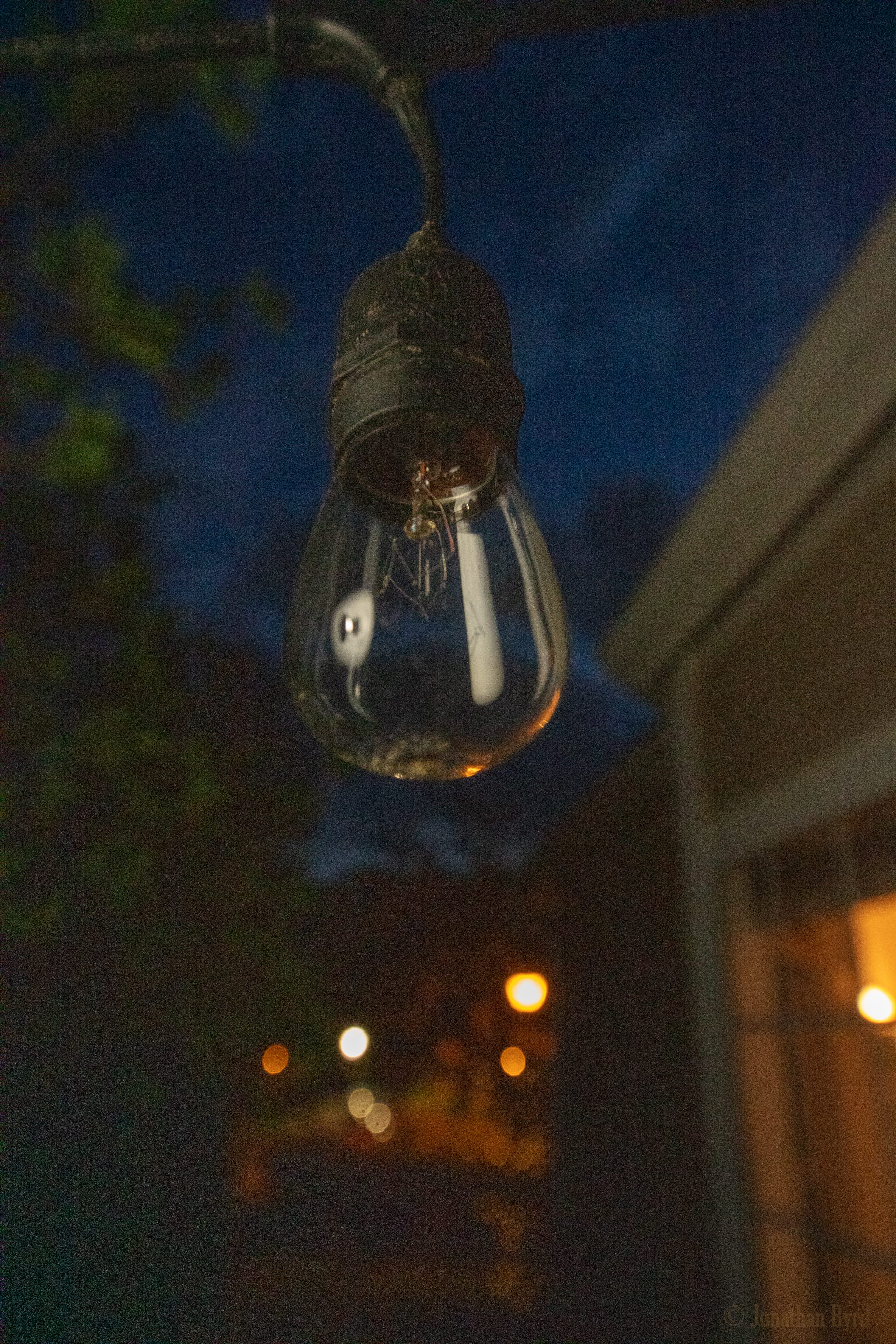
Light is just one of many manifestations of the electromagnetic force that binds electrons to protons, which allows us to have bodies and use the internet. Photons are the messenger particles of the electromagnetic force, flying around inside atoms and holding them together. No light, no atoms.
It’s not that light wouldn’t exist without stars. Stars wouldn’t exist without light.
The second question, and an excellent question, is:
“Since atoms can exist in what we consider total darkness, what part of the spectrum is the light from that you refer to?”
Temperature and energy are intimately related. When the temperature of the early universe came down to about 3000 Kelvin (nearly the same in Celsius or 5,000º F), electrons settled down enough to hold onto protons. Without all those charged particles bouncing around chaotically, suddenly there were a lot of photons traveling with nothing in their way, and most have been traveling ever since.
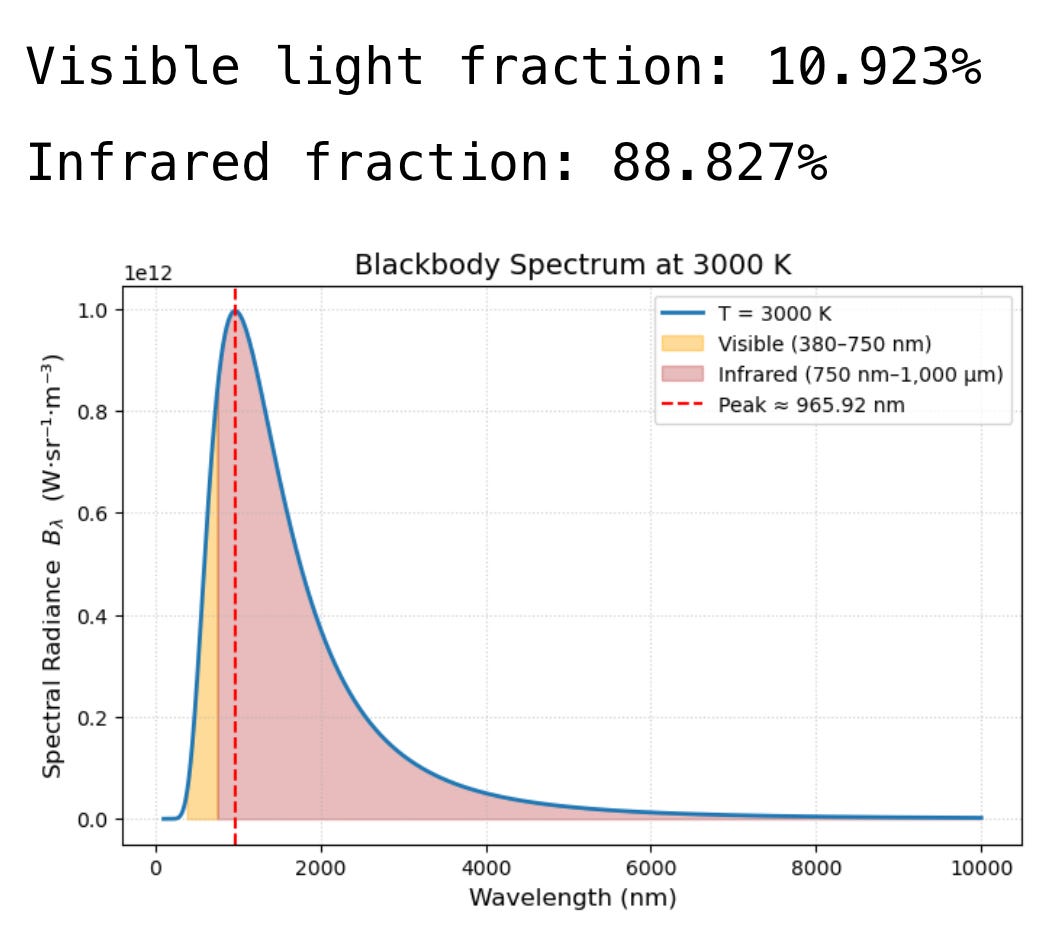
3000 Kelvin is the temperature of an old incandescent light bulb in your grandma’s house. You know how old indoor photographs look orange-y yellow? There wasn’t anything wrong with the film or the cameras. That was just the color of light coming off a hot piece of tungsten. The peak wavelength of the first freely moving light in the universe was about 966nm, in the near-infrared.
Wait. If it’s infrared, why can we see an incandescent lightbulb? They produce visible light, yes, but most of their energy is infrared. That’s why they were so inefficient. They should have been called ‘heat bulbs.’ About 10% of the electricity we paid for in the 70’s actually lit our homes.
Gasoline engines are almost as bad, by the way. Less than half of the gas you paid for is pushing your car down the road. The electricity in an electric car indeed has to come from somewhere, and the power plant that made it might be burning coal, but much more of it actually turns your wheels.
The oldest light in the universe is no longer visible. It’s not even infrared. You’ve heard of extremely distant galaxies discovered by the James Webb Space Telescope? Astronomers refer to redshift in terms of Z, and the farthest galaxies ever detected are located at around Z = 14.4.
The cosmic microwave background comes from Z = 1,100.
That’s why that light is so cold now, and so hard to detect. Your body is a hundred times hotter than the oldest light in the universe, so technically, you can put that in your Bumble profile.
But imagine that first burst of light in the universe as a lamp at your grandmother’s house. Being in the universe at that moment would have been like sitting inside the bulb. Good thing you’ve got me:
Your fan,
Jonathan Byrd.
I am more fond of the tungsten glow from the glass bulb than any color LED available, even warm white. At least one Edison base on my property has the sole purpose of keeping the well head from freezing, while that beloved glow is tucked away for the critters that find their way in. Speaking of which, just how many mice does it take to screw in a lightbulb?
Still two.
I’m interested in hearing your take on the cosmic question that I never hear addressed: What about the void itself? Is it really infinite or is it actually the inside of an atom in a molecule of water in a bigger void?